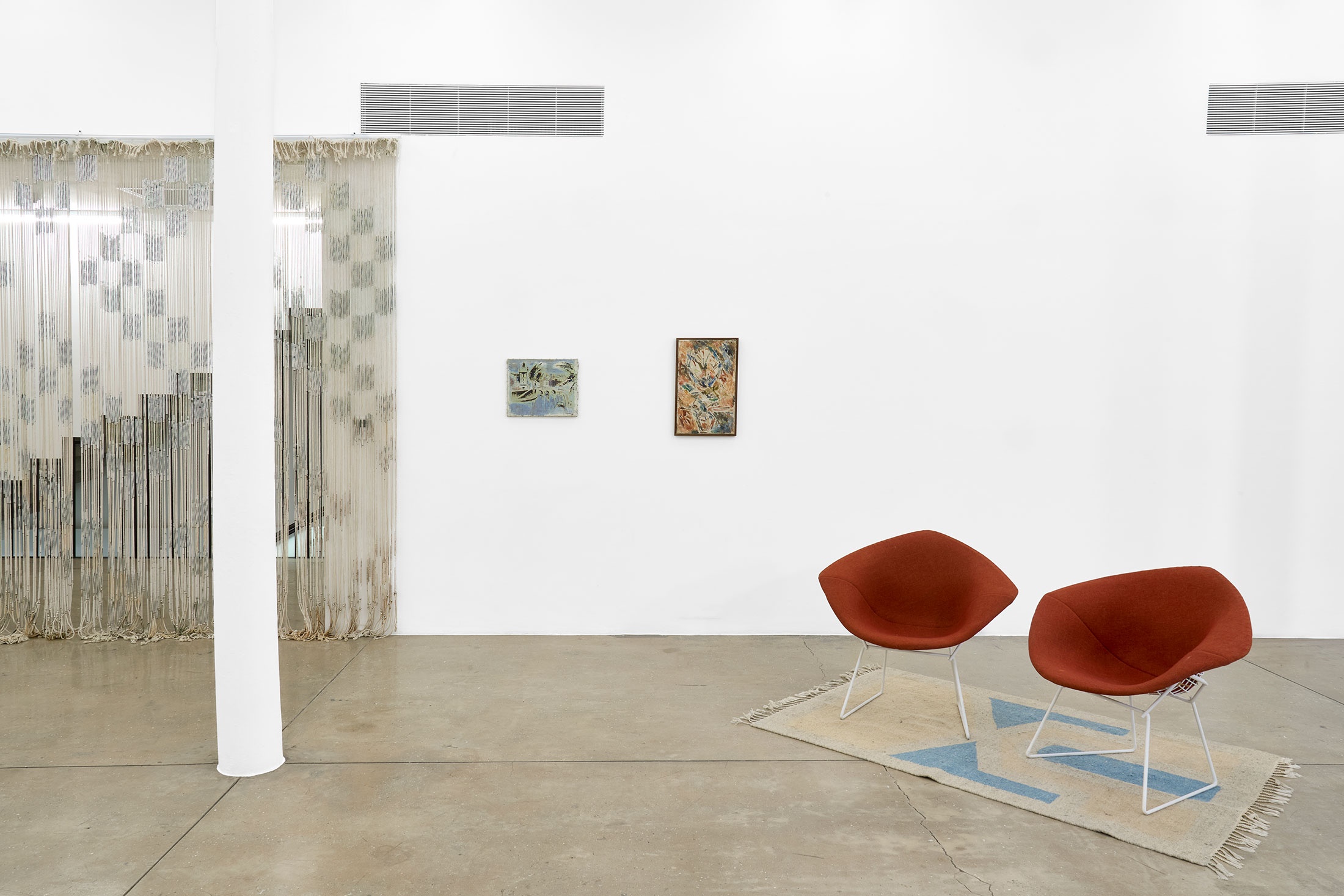
Two works introduce a fourth Sightline: pre-empt it, propose it. Folded into them are stories of modernist ambition, profound loss, and improvised community. The paired paintings were made in France by South African artists and friends Ernest Mancoba and Gerard Sekoto, who left their country of birth for Paris in 1938 and 1947, respectively, entering into self-imposed exile. To both, the French capital promised a vision of emancipation that glowed bright against apartheid’s suffocating darkness. But a sense of belonging was hard-won. While Paris would become a centre of anti-colonial theory and pan-African optimism over the course of the 20th century, greatly contributing to liberation movements and political struggles on either side of the Atlantic, the near-decade between the two friends’ arrivals was punctuated by war and occupation.
The hardships they individually faced were at once particular to their status as exiles and pervasive.
Mancoba arrived too soon. Classed a British subject (South Africa was still, at the time, a colony), he was imprisoned in a German internment camp following the fall of Paris, where he was held for four years. In half-rhyme, Sekoto, who arrived in an independent but war-scarred France, spent three months in a state psychiatric ward on the outskirts of the capital.
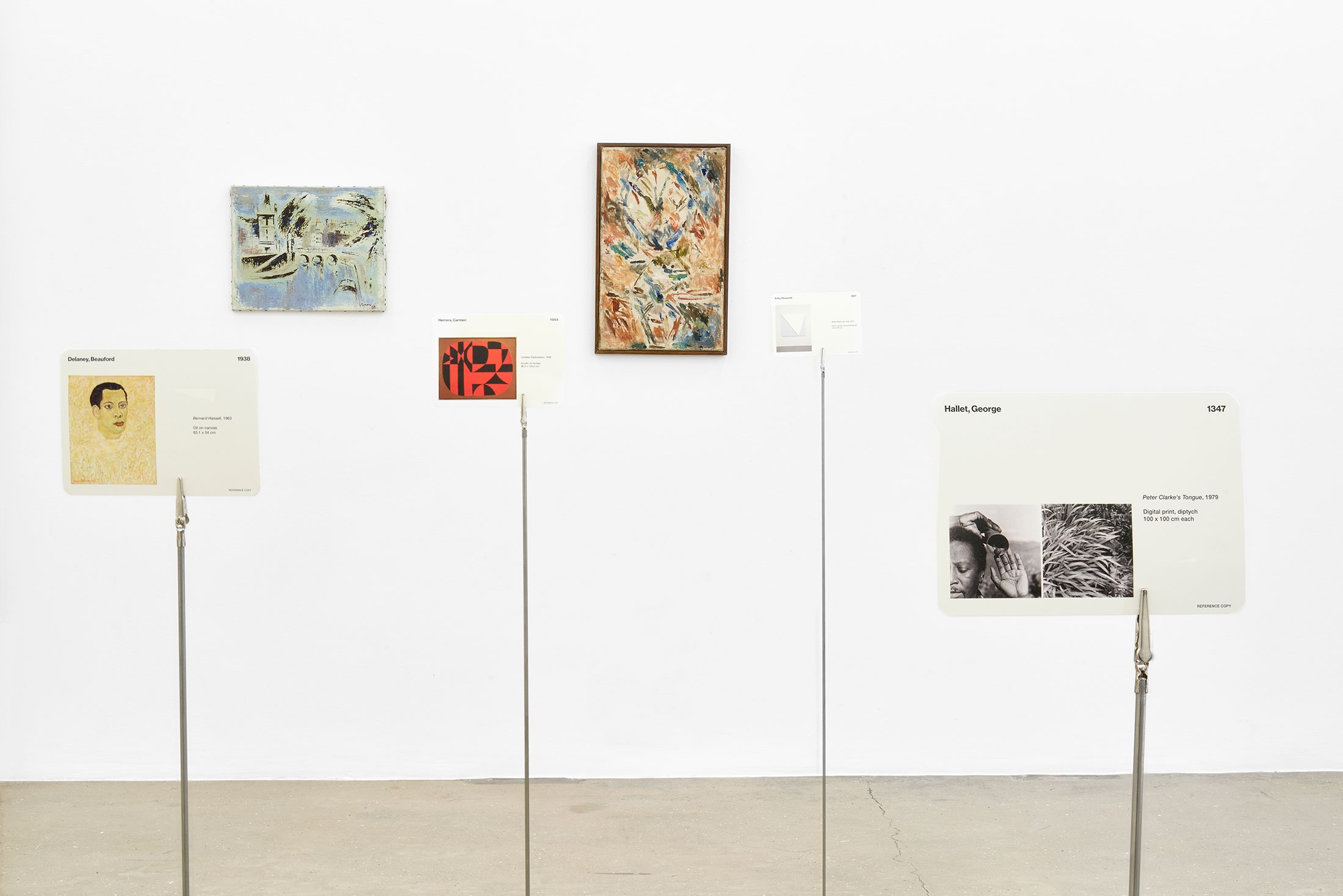
This Sightline might expand to include other artists from the diaspora, who similarly gravitated to Paris in the following decades, among them American painters Beauford Delaney in 1953 and Bob Thompson in 1961, both of whom are also represented in the collection. The Cuban painter Carmen Herrera also offers a compelling complement. Like Mancoba and Sekoto, she was greatly influenced by continental modernism. Her time in Paris from 1948 to 1953 marked a decisive shift in her work towards graphic abstraction and the refined geometric forms for which she is best known. Her arrival in the French capital, however, was wholly dissimilar to their first, hard years. Of the city, she wrote: “Paris in 1948 was essential for me… When I was there, everyone was there. It was a delicious time.” Herrera left New York, where she was living at the time, not under duress nor at immense personal cost but in pursuit of inspiration, and found it. Push and pull – the circumstances under which artists gravitated to cultural centres such as Paris – present a thread of enquiry to be followed as this Sightline plays out.