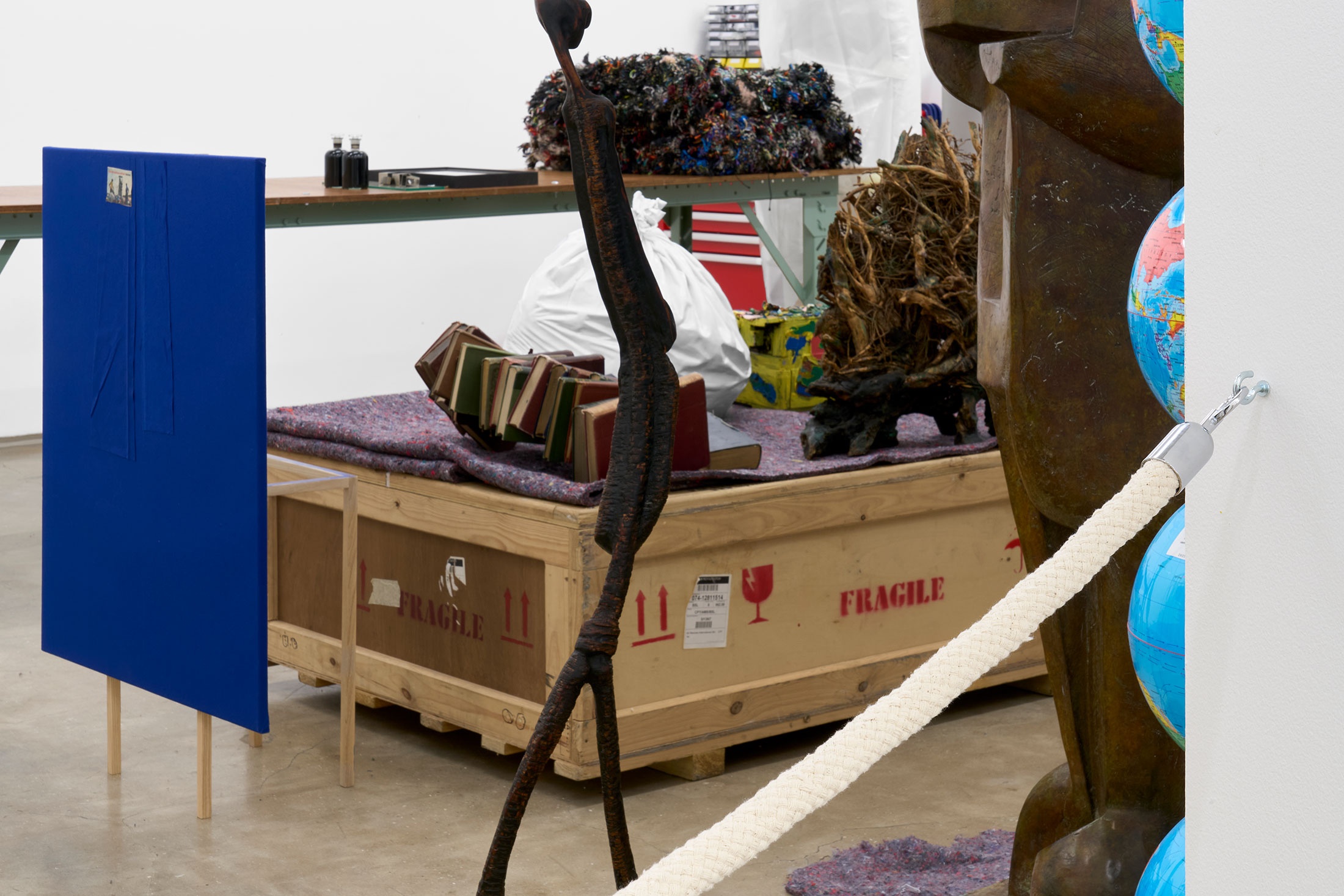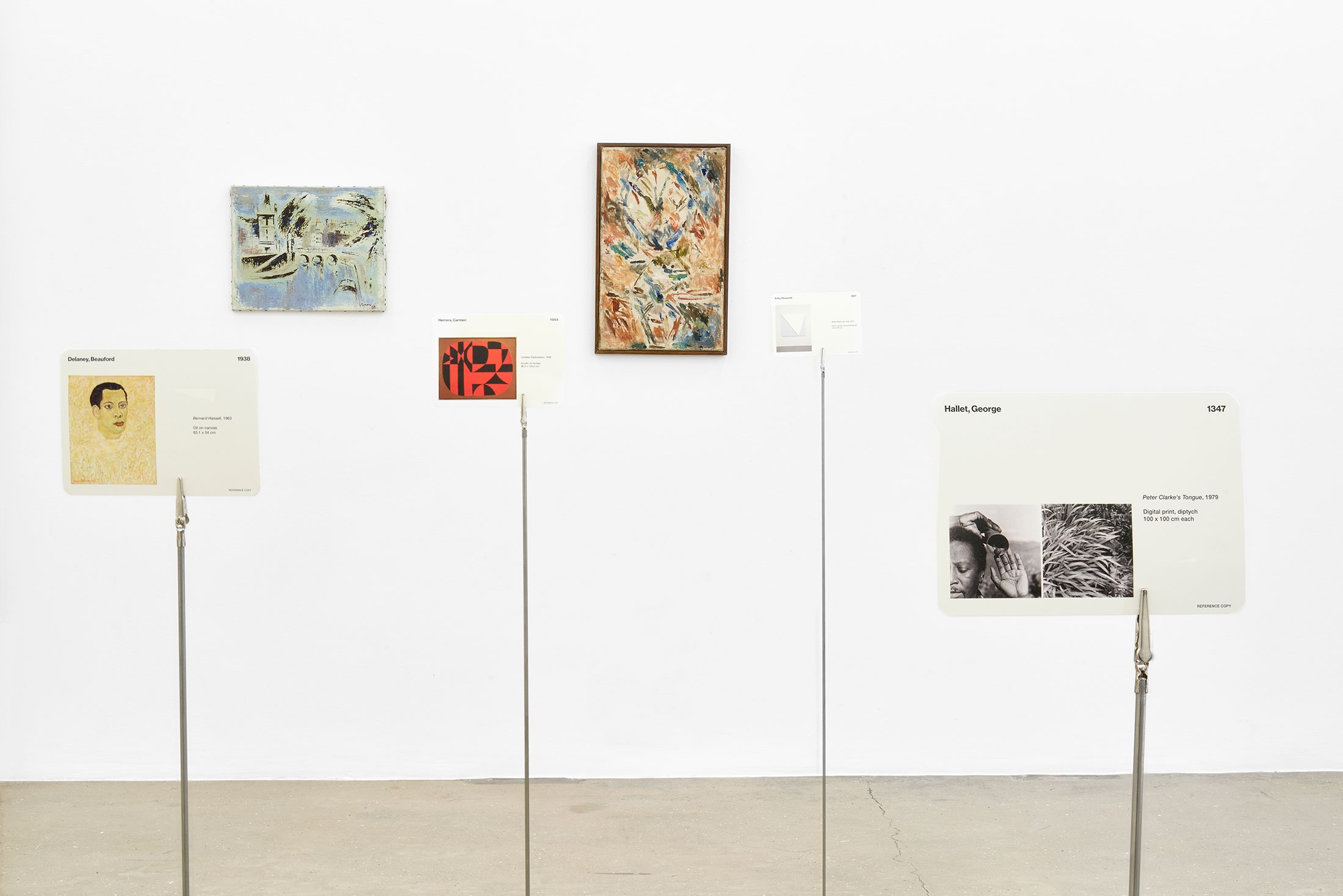
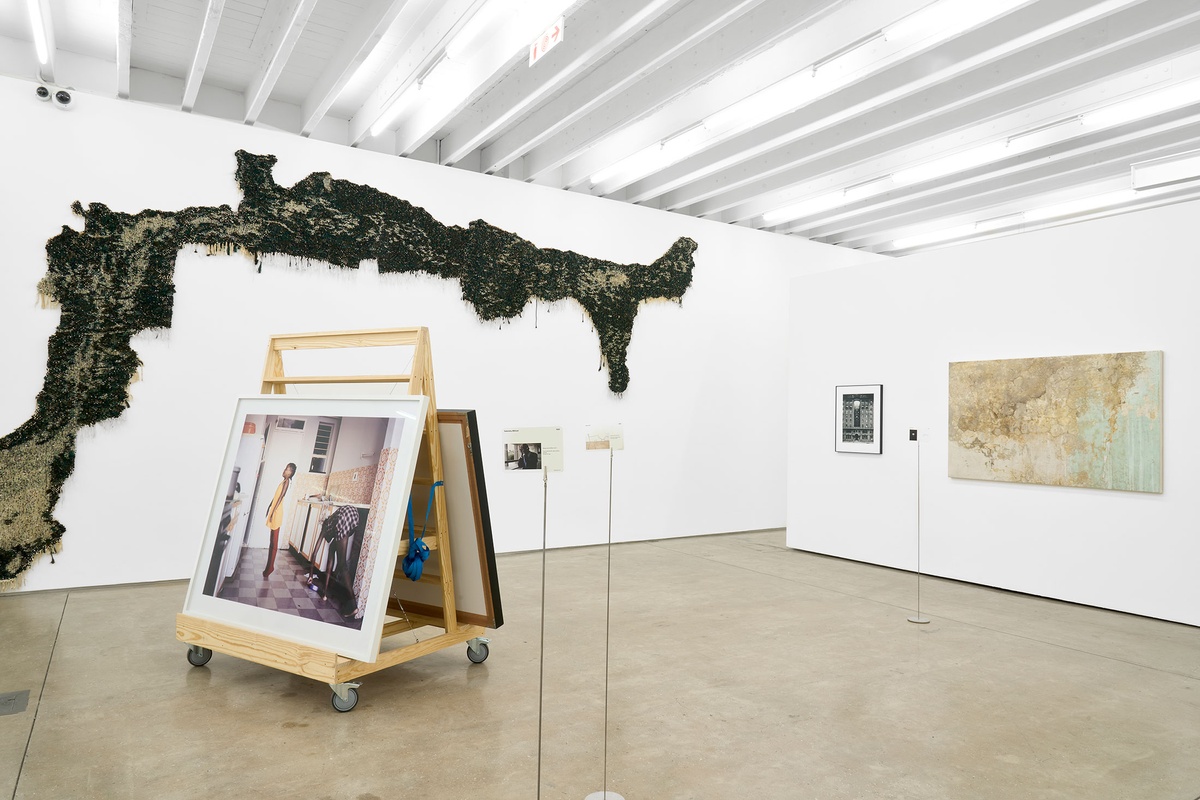
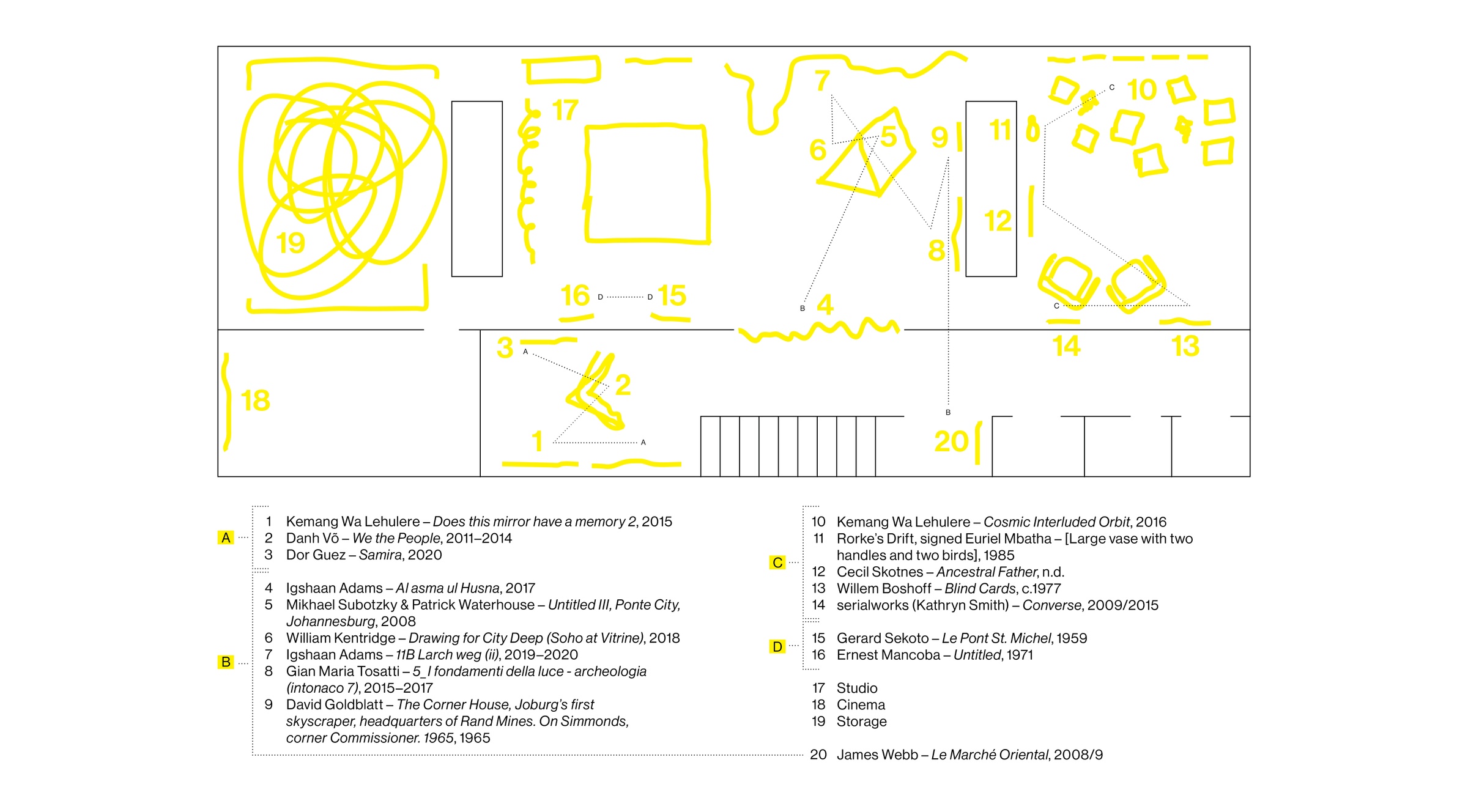
The exhibition, Sightlines, sees our team position artworks in small, conversational groupings. When not installed at A4, these reside in our archive – a research environment for curators, arts workers, and practitioners who may wish to revisit past work. Sightlines shares viewpoints from this archive with visitors. What stories might these artworks tell while standing together?
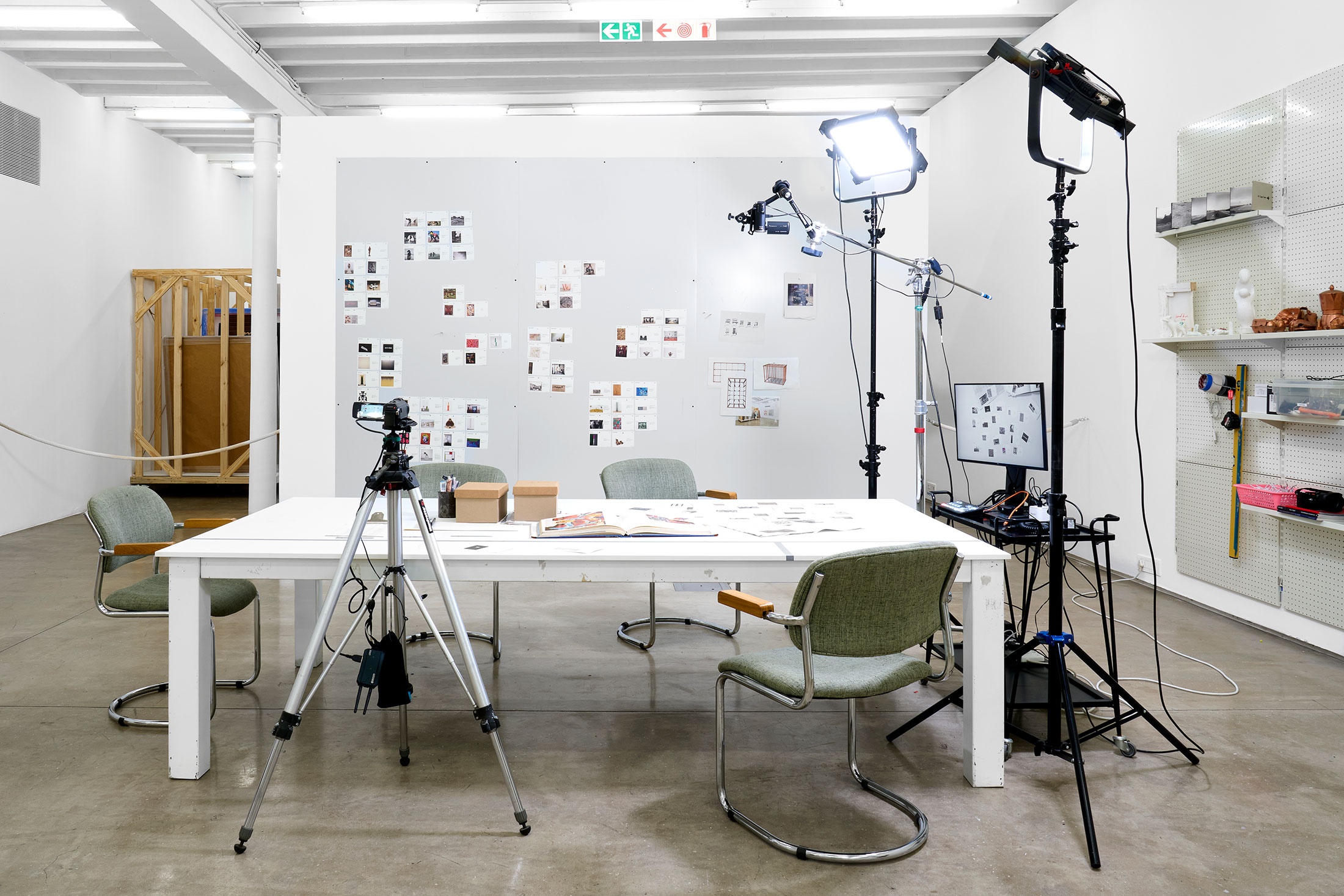
In preparation for this project, we printed a deck of cards, with each card representing a work. Multiple discrete objects, given this uniform ‘frame’, could be played alongside one another. With everything pictured at once, connections became visible, uninhibited by geographical distance or pre-conceived hierarchies. This is a 'Sightline' – a passage to thought that emerges across the chatter of like and unlike things in the room. Sets of artworks constellate along an axis and come into focus. Our approach has been to edit and refine curious lines of sight, installing select artworks in the gallery with cards remaining as stand-ins for others.
Sightline A:
Begin with a backward glance. History addresses itself variously to the artist as artefact, material, subject, and story. In this first Sightline, three artworks offer three views into the past. In one, a found object is hung alongside a memory transcribed in chalk on blackboard. In another, a monument of conflicting resonance (safe harbour, war) stands as a fabricated fragment... Read more
Sightline B:
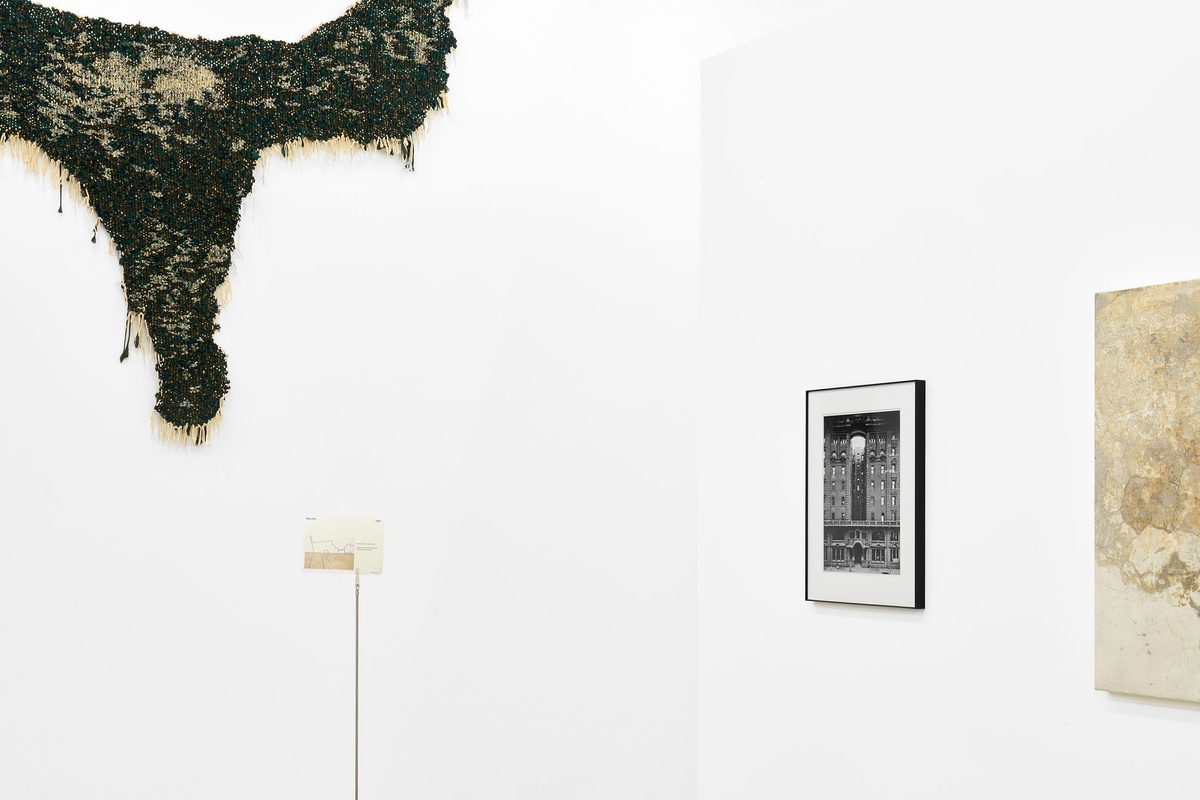
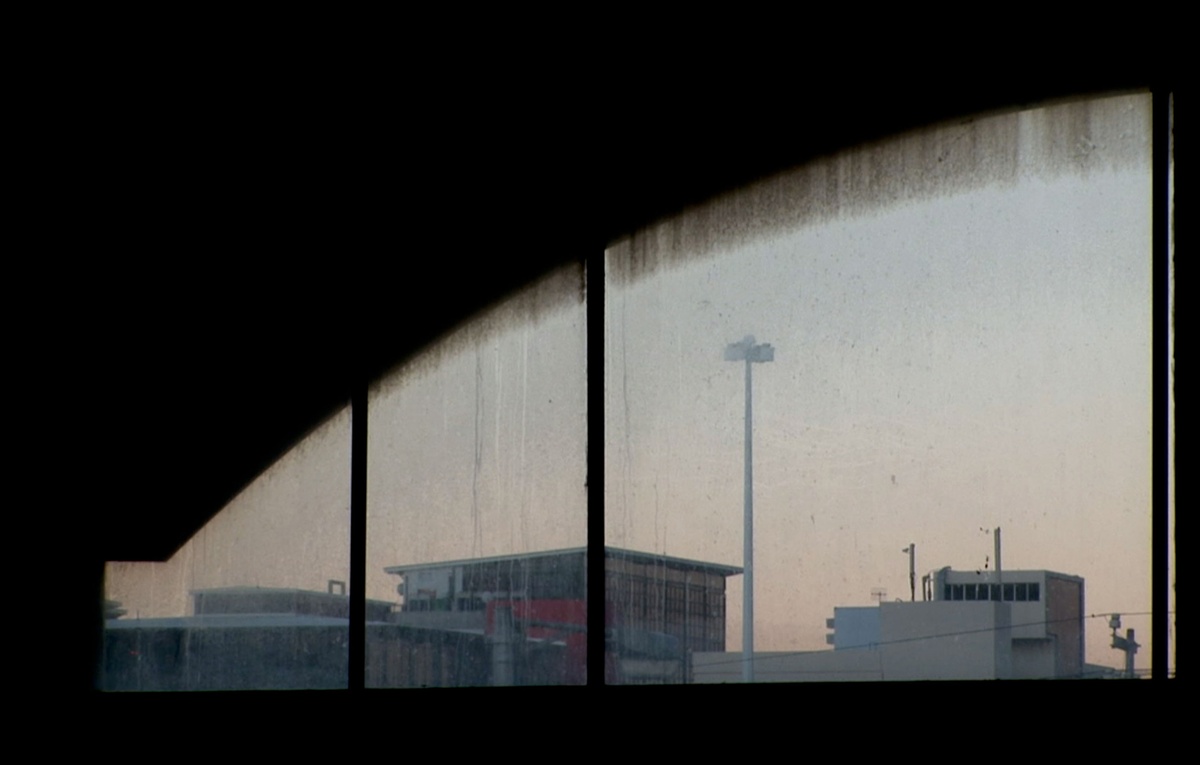
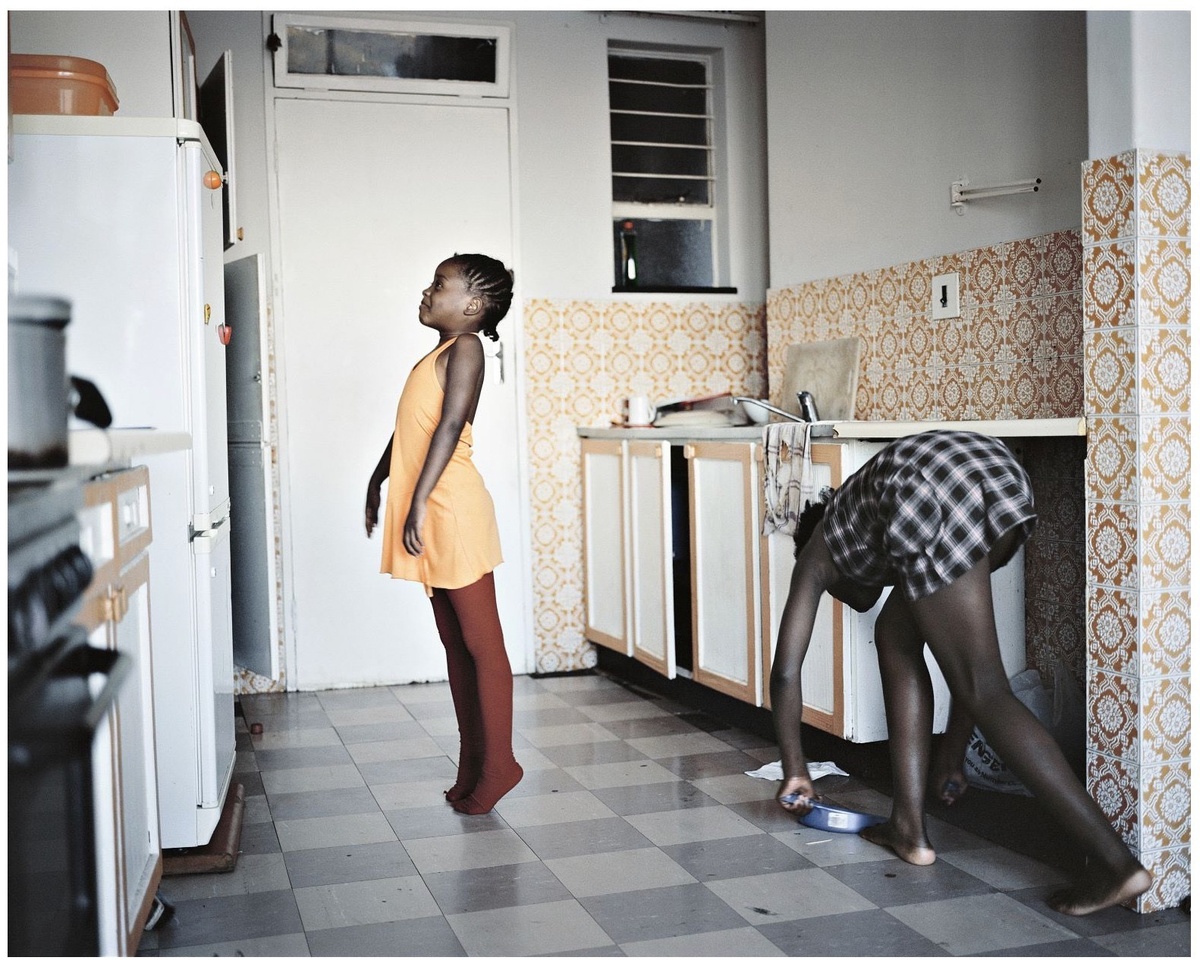
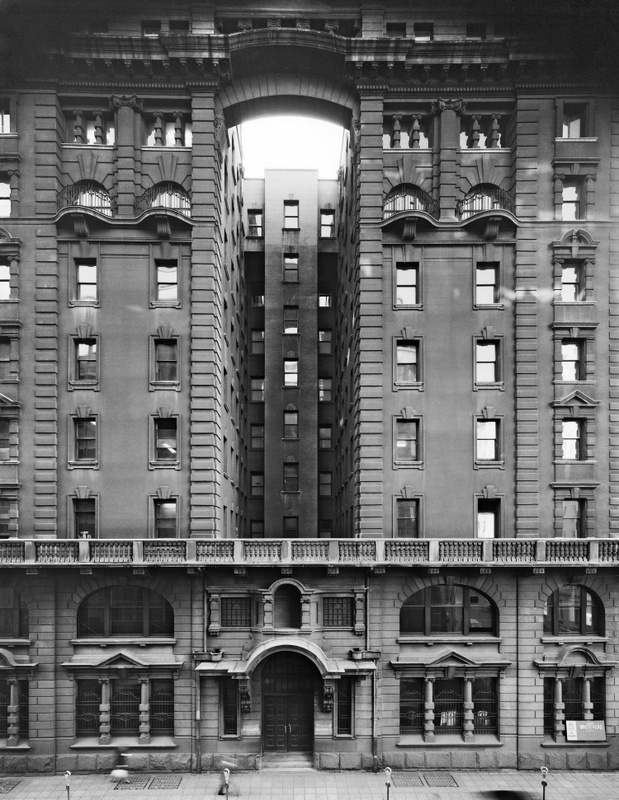
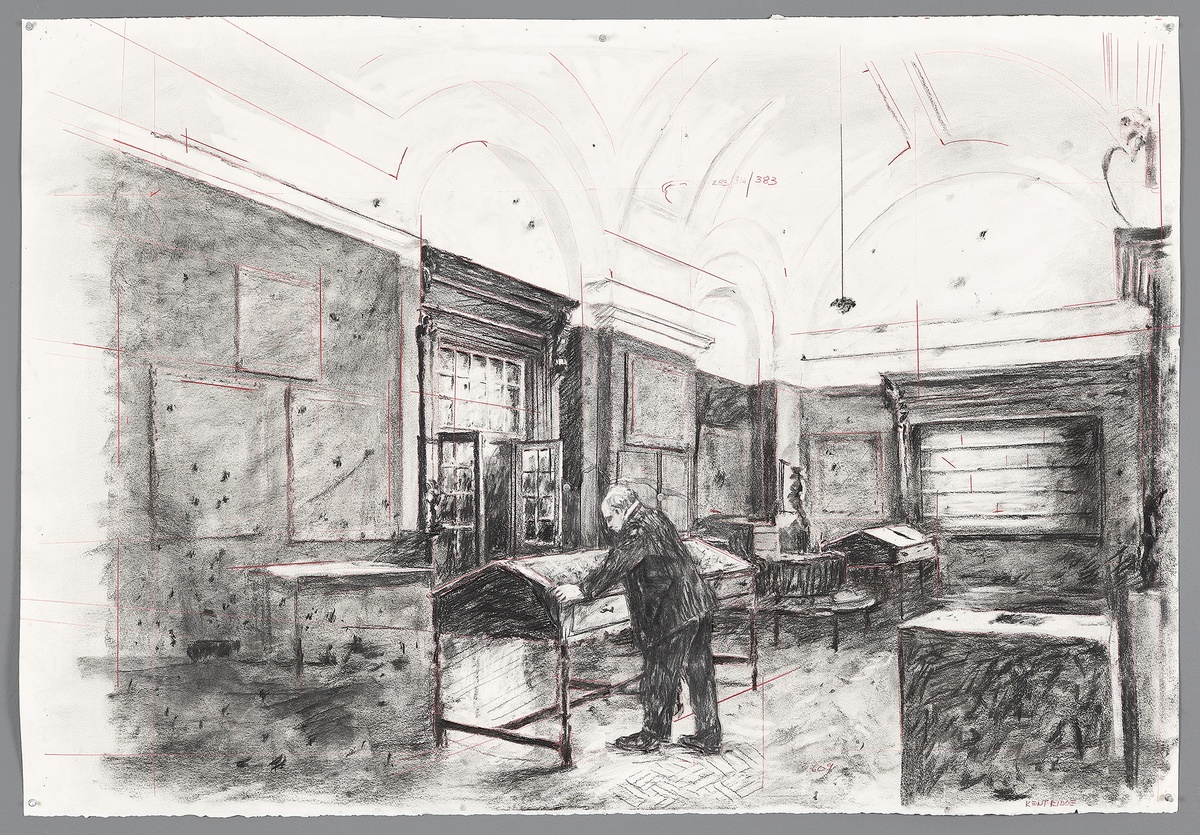
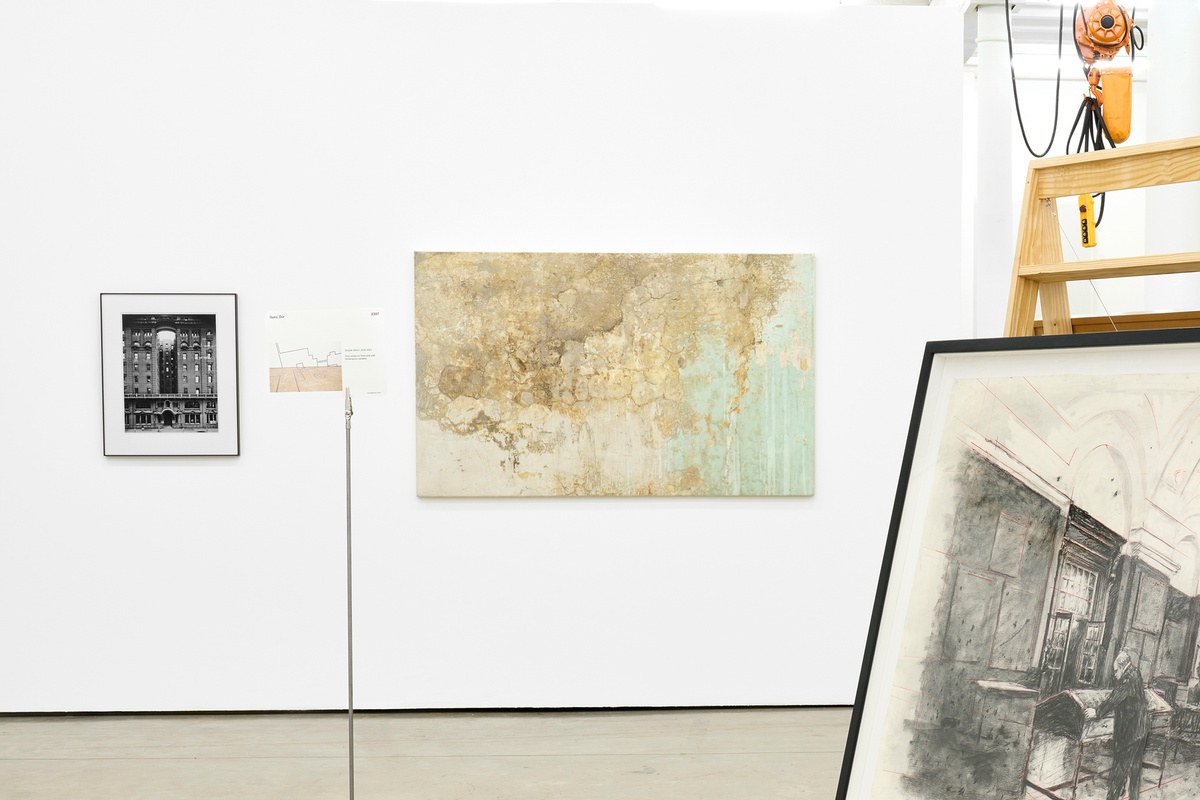
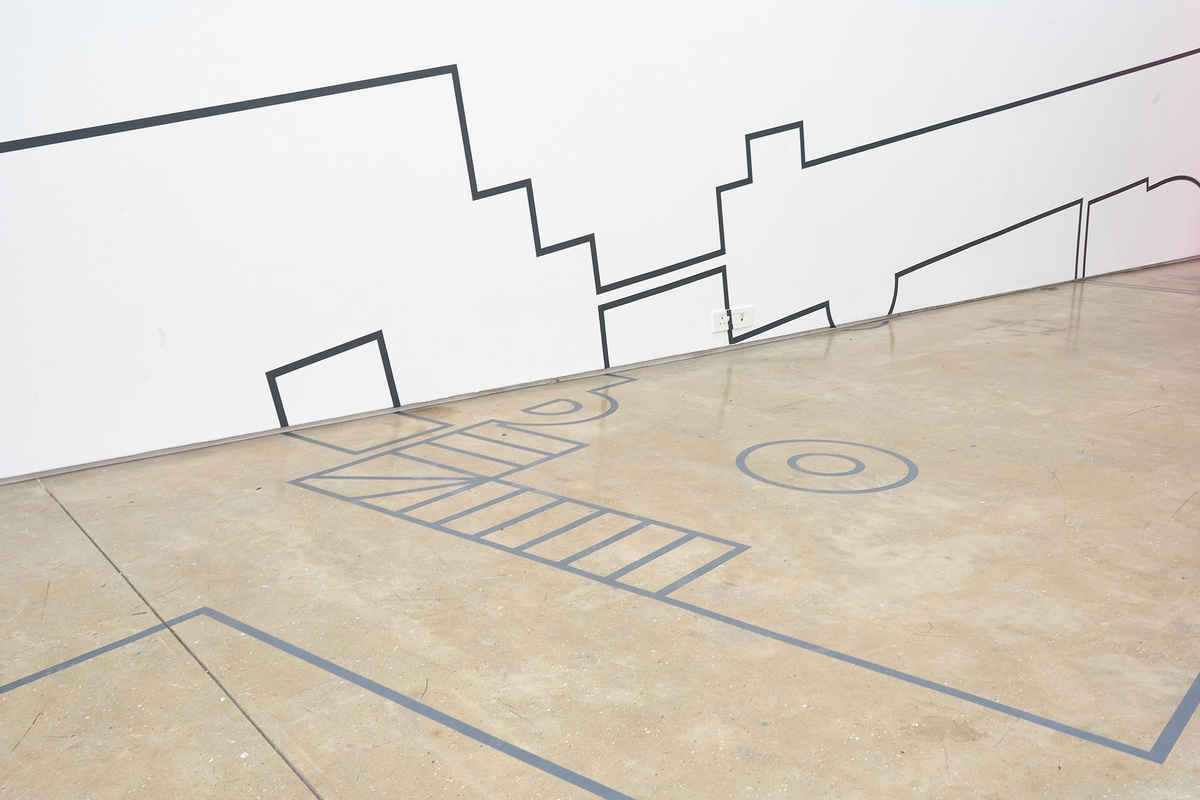
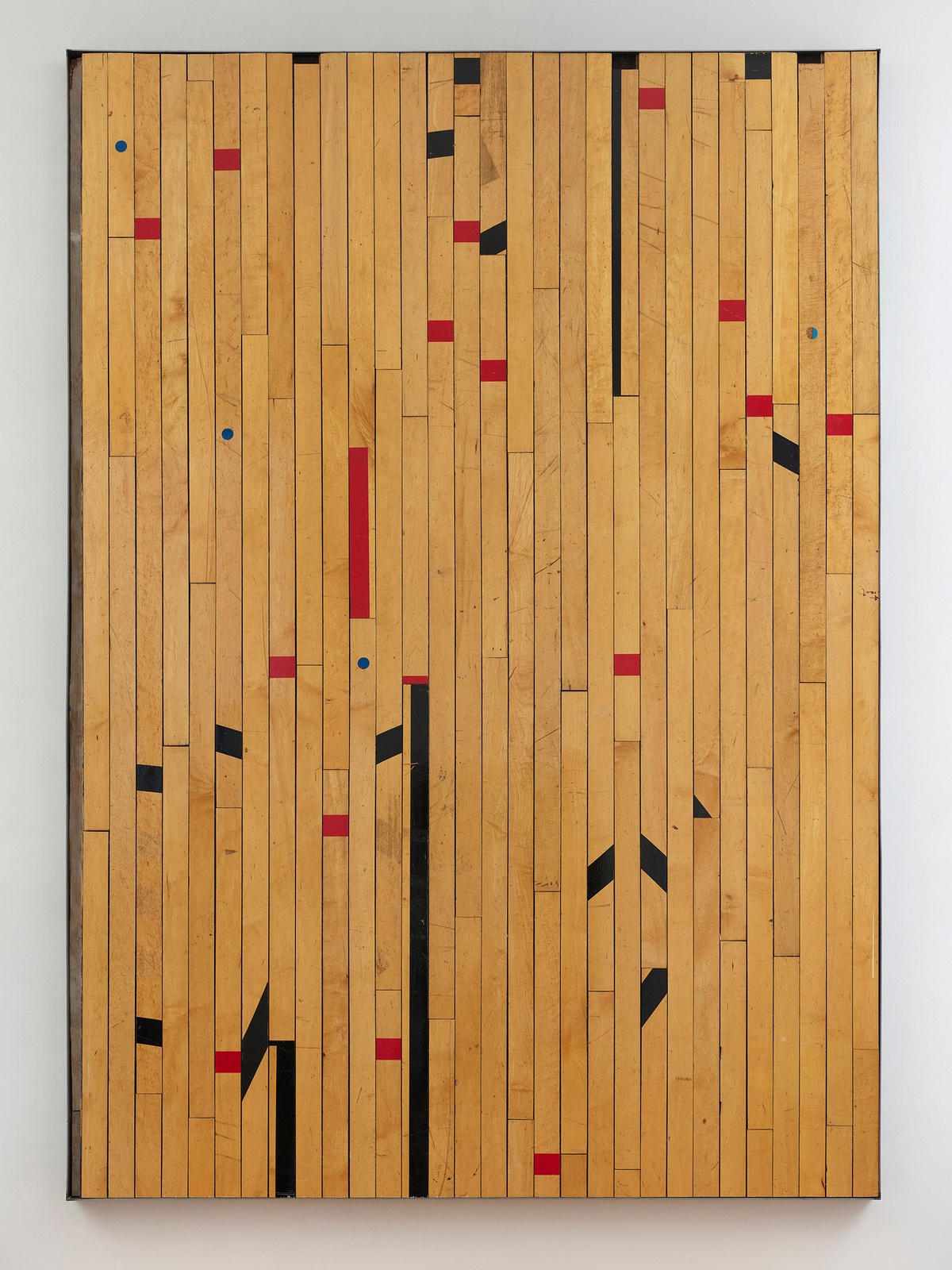
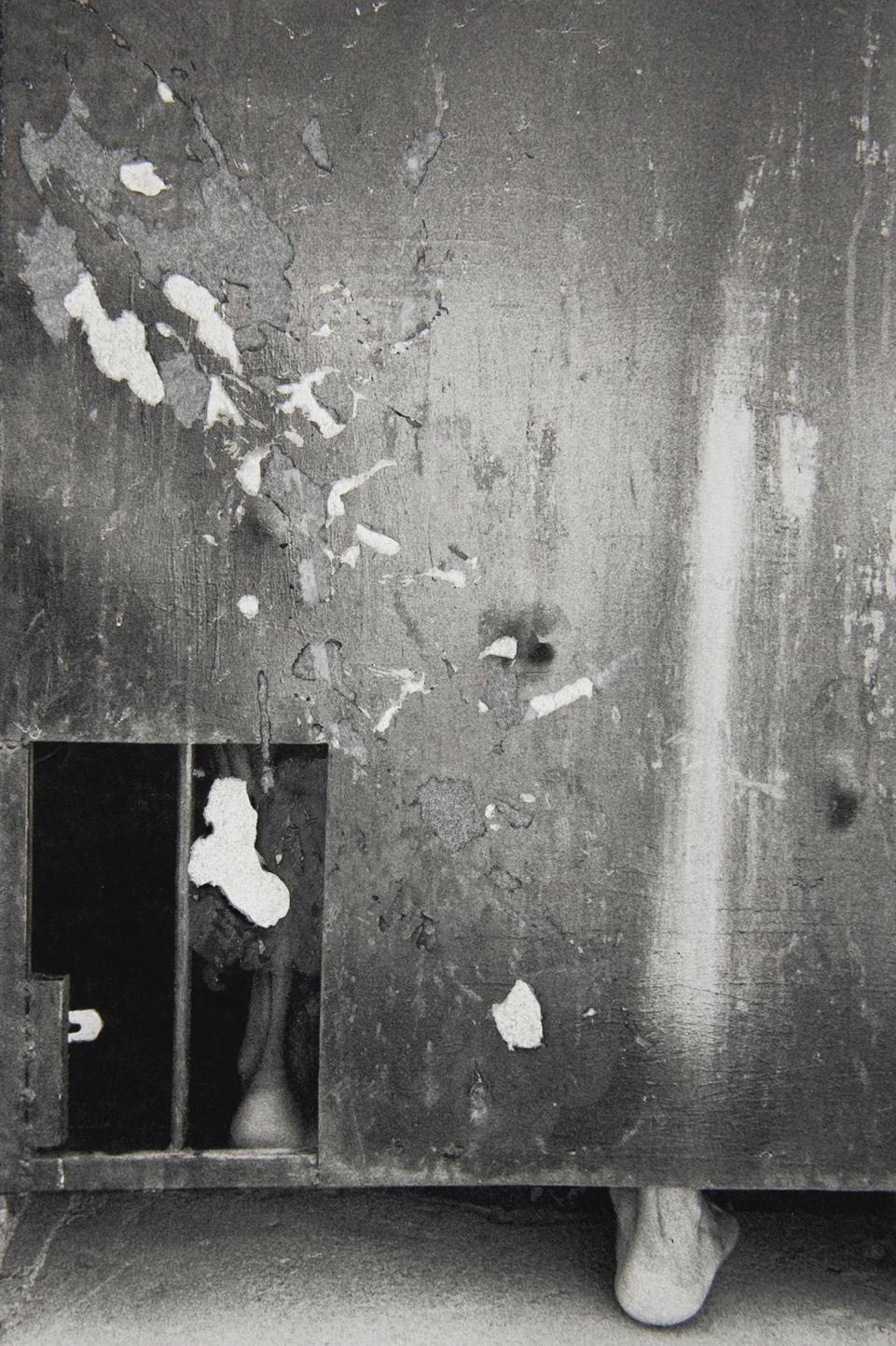
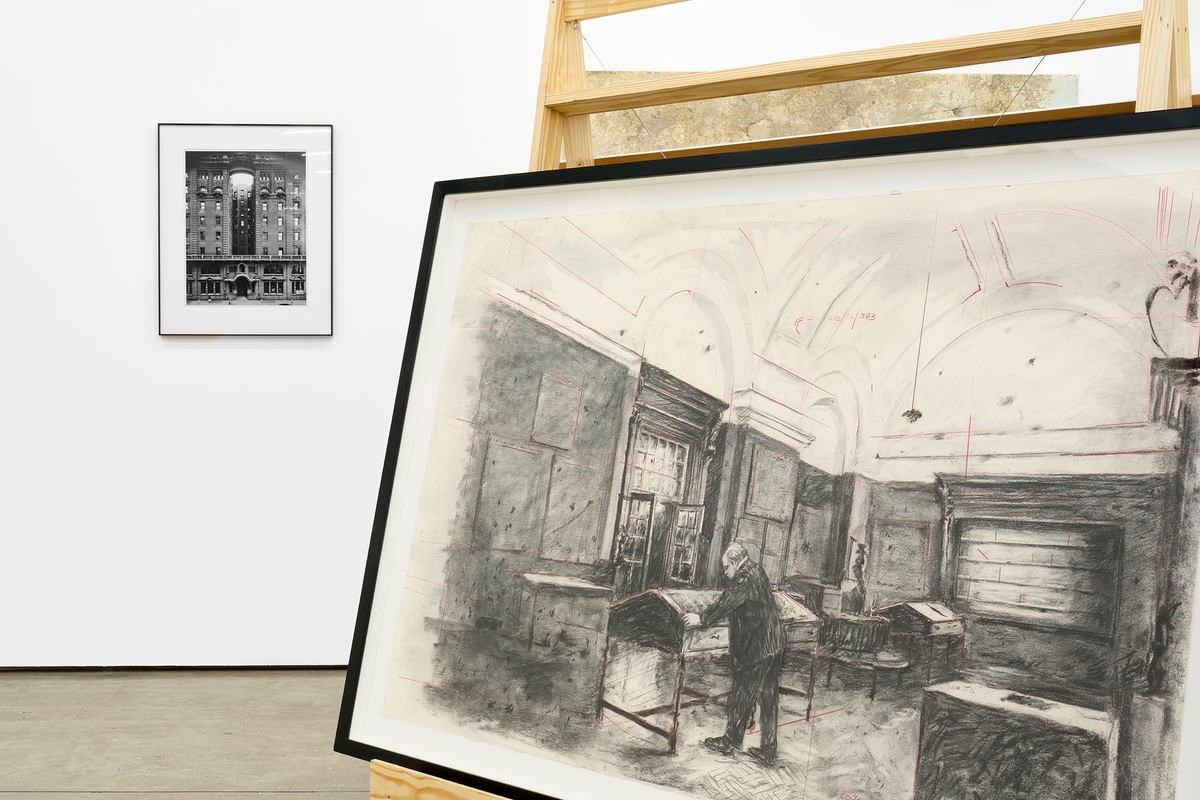
One building performs as the central protagonist in each of these works. In 1965, David Goldblatt photographed The Corner House, Joburg’s first skyscraper, headquarters of Rand Mines, on Simmonds, corner of Commissioner. Reading the title in full lends the building hubris, and some irony. Commissioned by mining magnate Hermann Eckstein Jr (who retained the humble ‘House’ in the name with a nod to previous, more modest dwellings that had occupied the site), the building imported the recently developed steel armature supporting the flourishing construction of skyscrapers across New York City... Read more
Sightline C:
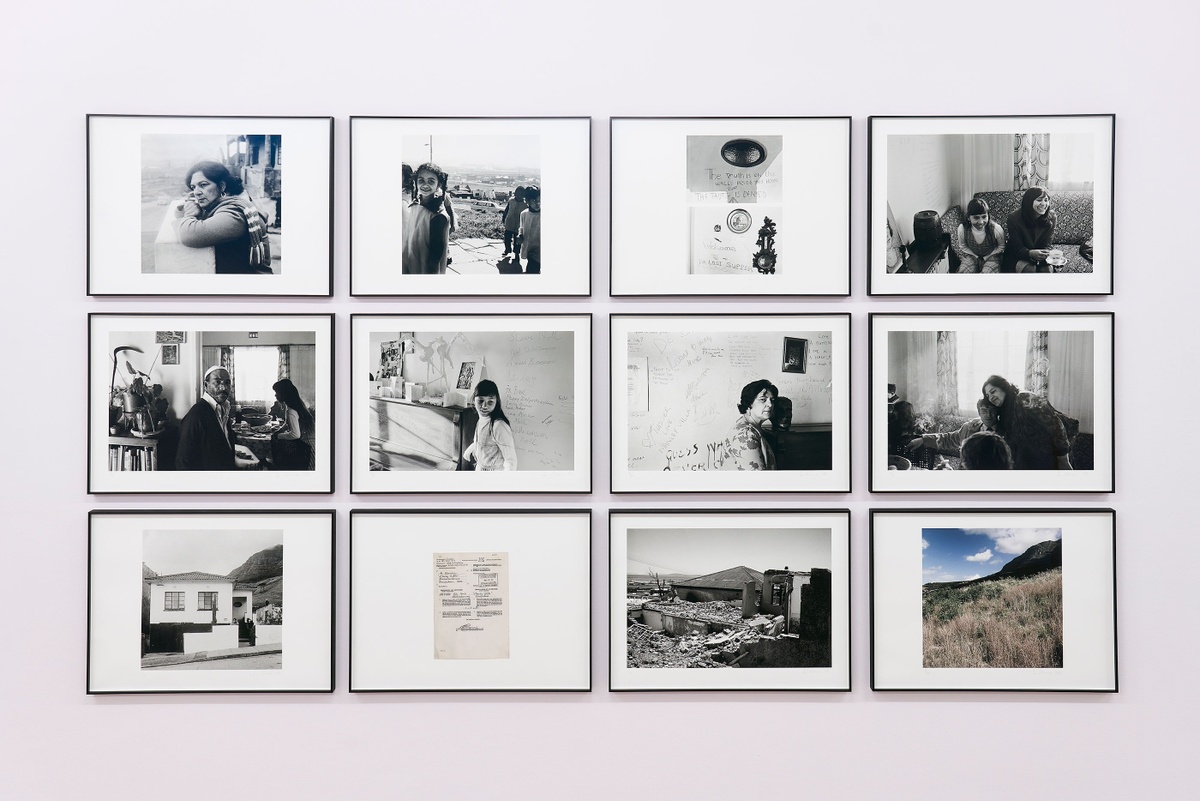
“Rorke’s Drift was no ordinary school,” Peder Gowenius writes in the introduction to Rorke’s Drift: Empowering Prints. When he and Ulla Gowenius landed in South Africa from Sweden, they knew very little about the country. Naive to apartheid, the couple arrived at the mission station in (what is now) Kwa-Zulu Natal with relatively modest aims: to explore traditional craftmaking and whether these crafts could assist women in rural areas to make a living. “The whole idea was absurd and politically unclear,” he writes... Read more
Sightline D:
Two works introduce a fourth Sightline: pre-empt it, propose it. Folded into them are stories of modernist ambition, profound loss, and improvised community. The paired paintings were made in France by South African artists and friends Ernest Mancoba and Gerard Sekoto, who left their country of birth for Paris in 1938 and 1947, respectively, entering into self-imposed exile. To both, the French capital promised a vision of emancipation that glowed bright against apartheid’s suffocating darkness. But a sense of belonging was hard-won... Read more
Sightline E:
Pulled elsewhere
31 July 2025
As a counterpoint to the paired paintings that comprise the Sightline ‘Equal in Paris’, two further works were later added. Placed at a remove from the original proposition, Kevin Atkinson’s Untitled No. 1 (1967) and Christo Coetzee’s Hemelse Fiets / Celestial Bicycle (1960) are representative of a cohort of mid-century South African artists who travelled to global art capitals and returned to pursue and espouse ideals of international modernism in the country. Their journeying through the world and through successive styles and influences was afforded by their privilege as white artists. Which is to say, they were pulled elsewhere, beyond the seemingly parochial limits of South Africa’s art world. The influence of artists such as Atkinson and Coetzee on the otherwise conservative tastes of the time cannot be overstated. Atkinson, in particular, played a pivotal role in shaping generations of artists as an educator at the Michaelis School of Fine Art, University of Cape Town, where he worked for over thirty years.
Sightline F:
Street life
16 August 2025
This room has functioned, in turn, as a storage space for Sightlines and a place to group artworks in fairly loose constellations towards potential research and writing that may or may not become resolved. At present, we reflect on street life and interactions between the human and built environments. A bar owner is sold as an artwork in Ed Young and Andrew Lamprecht’s art students’ caper. Among the curatorial team’s various interpretations, an outsized pair of legs by Jared Ginsburg works to magnify the humanity of undocumented or unhomed bodies often rendered invisible. Dan Halter maps migration using woven travel bags. The red, white and blue plastic carriers are, depending on the context, derided as ‘refugee’ or ‘must go’ bags in slang use, but also more sweetly referred to as ‘help me carry’ bags, evoking journeys home for the holidays – particularly to the Eastern Cape from Cape Town – for learners from Lalela’s after-school art curriculum who visited Sightlines for A4’s Teen Curators programme. Well-worn bags indicate areas experiencing high levels of emigration, where immigrants might seek entry into places formed by newer, unused material. Kevin Beasley’s street barricade stands upright. Made while the artist was in residence at A4, visiting Cape Town from New York in 2020, the sculpture extends reflections on apartheid spatial planning in this city and the work of street protests and rallies more broadly. (Apartheid spatial planning controlled communities who were forcibly removed from the city centre to townships on the periphery by constructing one access road with a single entry and an exit point that was visibly policed and patrolled. In Cape Town’s contemporary taxi wars, those same avenues are used by transport providers to shut down streets to rivals, commuters, and law enforcement, ensuring communities are trapped within or without the barricade.)
We asked urbanists Gautam Bhan and Edgar Pieterse for insight into a potential ‘street’ thematic. Bhan remarked on the watercolour strip across Peter Clarke’s collaged painting – that it might be read as a road in Delhi that resists regulation, the bleed, ebb and flow of Clarke’s orange and blue representing the interplay between vehicles, body, and wares, with no defined border or edge separating the multitude of potential interactions. Lastly, Robin Rhode makes the street into his studio, where a school of fish is animated through the artist’s physical performance and photographs.
Ben Johnson
Writers:
Lucienne Bestall
(Sightline A, Sightline D)
Sara de Beer
(Sightline B, Sightline C)
Editor:
Sara de Beer