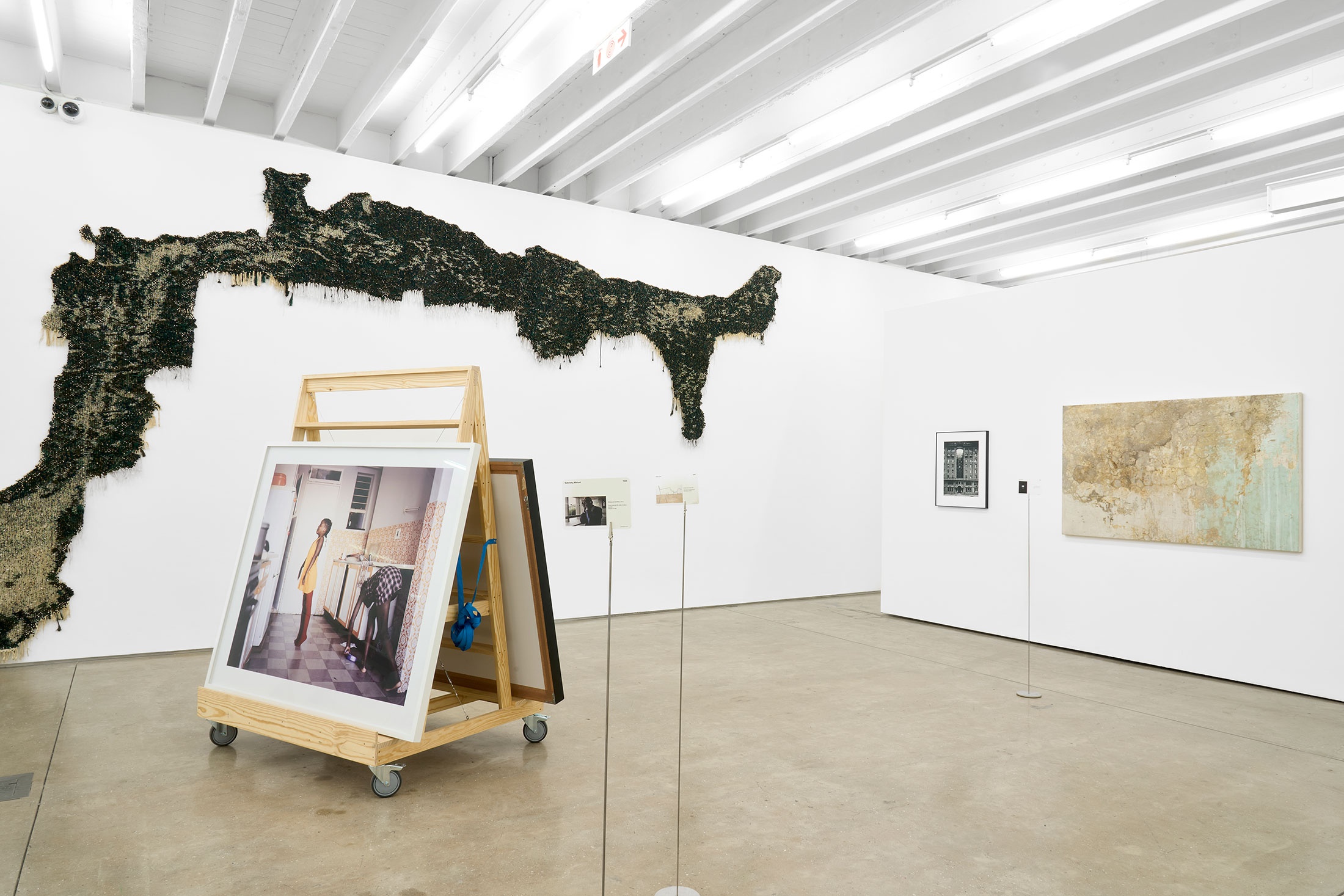
One building performs as the central protagonist in each of these works.
In 1965, David Goldblatt photographed The Corner House, Joburg’s first skyscraper, headquarters of Rand Mines, on Simmonds, corner of Commissioner. Reading the title in full lends the building hubris, and some irony. Commissioned by mining magnate Hermann Eckstein Jr (who retained the humble ‘House’ in the name with a nod to previous, more modest dwellings that had occupied the site), the building imported the recently developed steel armature supporting the flourishing construction of skyscrapers across New York City. In 1903, The Corner House was the tallest building in Johannesburg, adorned with marble floors, fire-resistant vaults for gold bars, a copper-covered dome, and African teak interiors. The year before Goldblatt photographed it, it had become Barclays Bank, perhaps no longer sufficiently imposing for Johannesburg mining’s enormous ambitions – development of a bigger ‘Corner House’ was completed at a nearby intersection on the same Commissioner Street. Goldbatt’s persistent quoting of Johannesburg’s structures in his images excavates the dominant philosophies (political, social, and environmental) that underpinned that city’s construction of wealth and power.
Ten years after the Corner House opened (1903), Johannesburg Art Gallery’s foundation stone was laid (1913). In Sightlines, the two buildings are brought together. William Kentridge draws JAG in charcoal and ink for his film-work City Deep (2018).
The domed ceilings appear intact, the room fulfils the obligations of a museum (there are things on the wall, at the very least, and cabinets for safe holding and display).
Why, then, this aura of misgiving? The shelves are empty, the storage units oddly stashed, while mining magnate Soho Eckstein insouciantly leans with both hands pressed against the vitrine. City Deep will show images of zama zama miners digging a pittance from the abandoned shafts beneath Johannesburg while JAG deteriorates and stumbles. The attendant sinkholes, dangers and entrapments of Johannesburg’s mining history provoke this informal economy – a desperate means of scraping a living while the city’s infrastructures collapse and fall away. It has been reported in the Daily Maverick newspaper as recently as November 2024 that JAG has extensive water damage, an ‘imperilled’ art collection, and is at risk of crumbling into ruin.
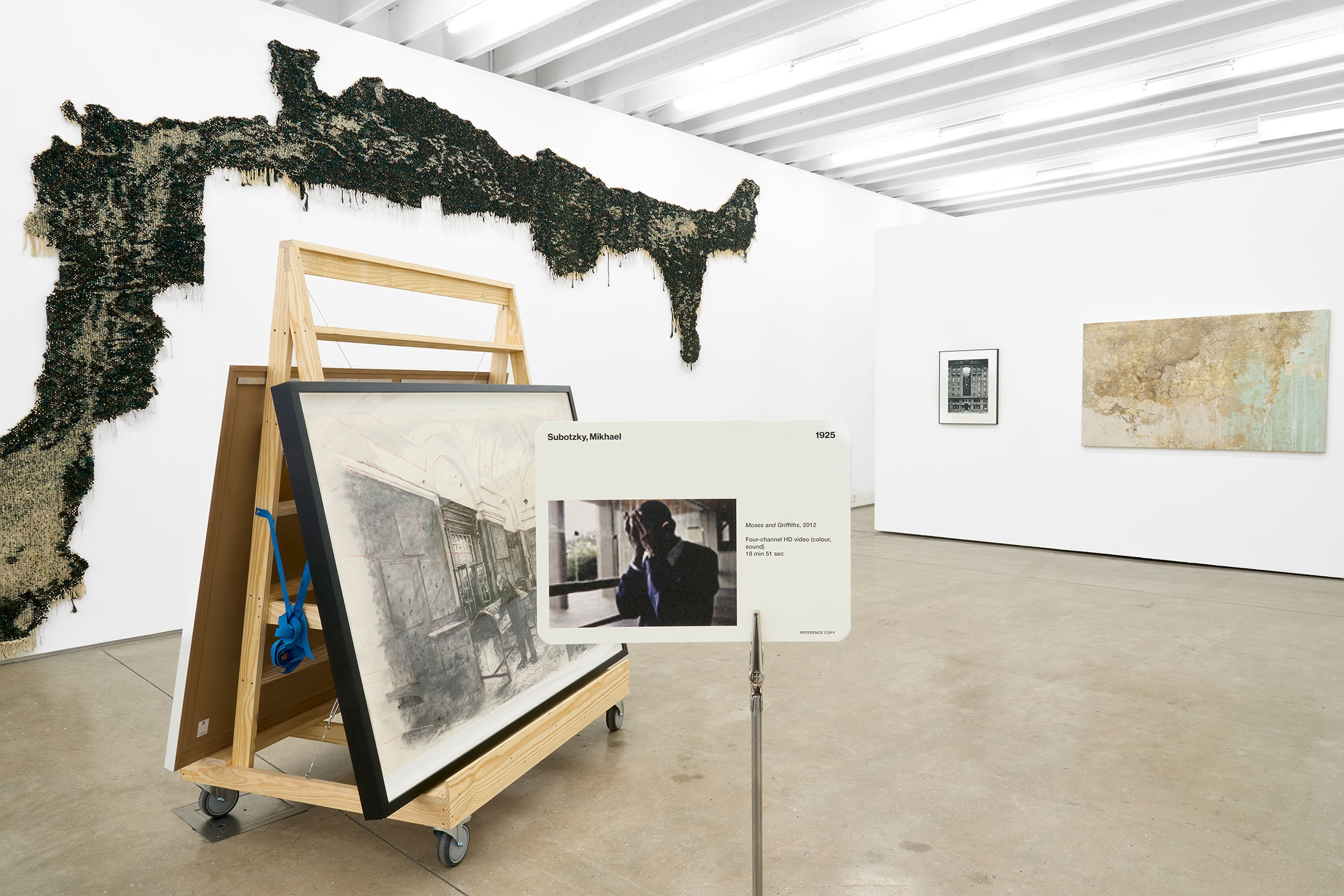
When Patrick Waterhouse and Mikhael Subotzky began their epic portrait of Ponte City in 2008, the landmark (built in 1975) was possessed of a storied infamy, a place to point to as proof that Johannesburg was a violent and unmanageable city. Photographing the apartment block over six years, the artists’ long-term engagement with Ponte City complicates these disparaging narratives. In place of hyperbole, many of the images within the project capture the daily intimacies of residents’ communities. In this photograph, a child in a bright-orange dress stands on tippy toes, as if preparing to grow, to fly. Her tallest and brightest self illuminates the frame as an age-mate sweeps the already spotless room.
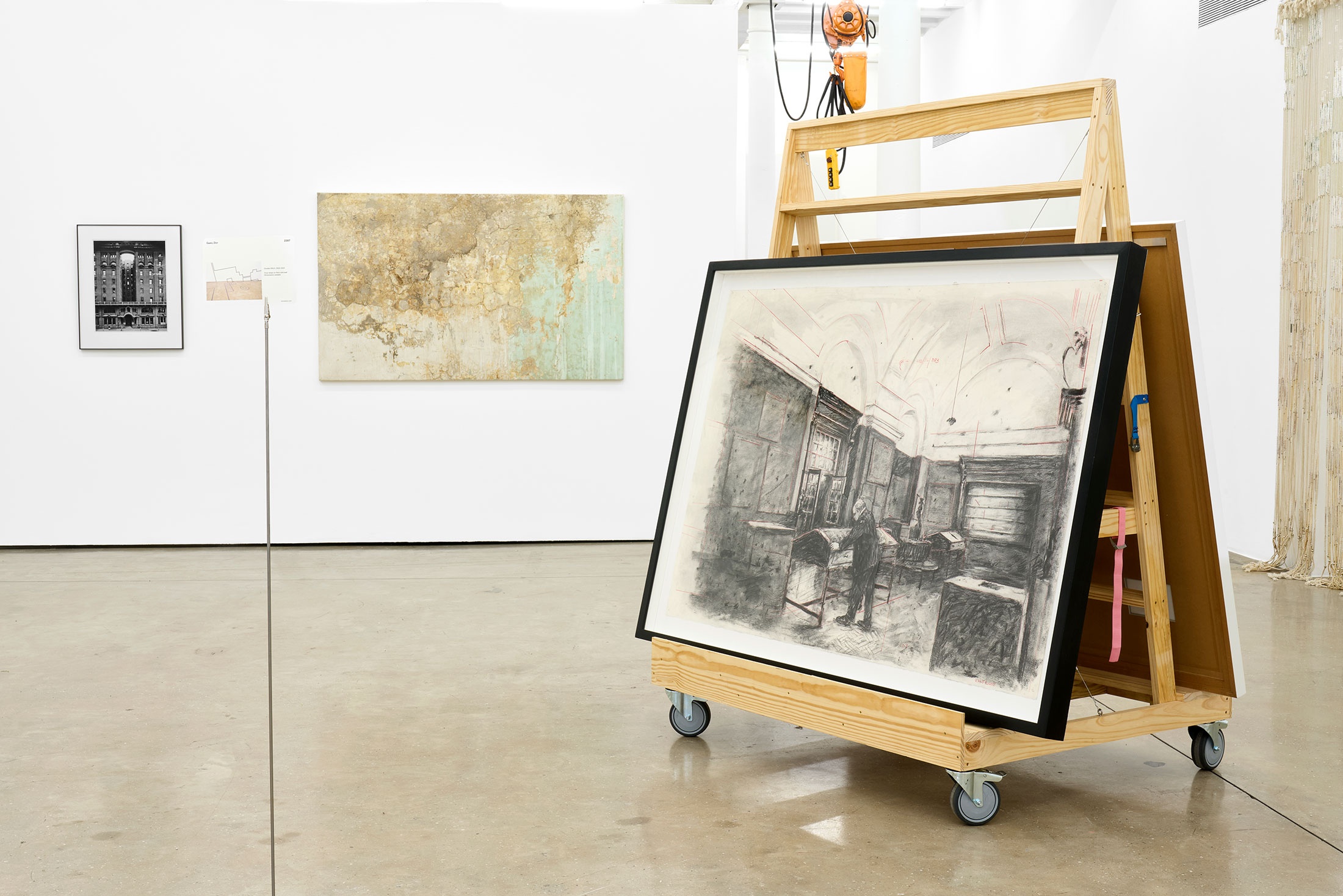
Gian Maria Tosatti’s portrait of life within the convent di Santa Maria della Fede, 5_I fondamenti della luce - archeologia (intonaco 7), performs the same techniques utilised by conservators to preserve frescoes of cultural significance, upon the walls of that ancient building. Since the 15th century, Santa Maria della Fede has been a rigid convent administered by nuns for sex workers, abandoned, and unmarried women; a safe-house during war; a refuge after earthquake; a corporate-owned building with links to Naples’ underworld; standing empty, falling into ruin, and used for illicit activities. Tosatti’s city-wide project throughout Naples, Sette Stagioni dello Spirito (Seven Seasons of the Spirit), revived the building. For the exhibition The Future Is Behind Us at A4, December 2022–April 2023, Tosatti was asked about 5_I fondamenti della luce - archeologia (intonaco 7).
When I started Seven Seasons of the Spirit in Naples, 200 churches stood abandoned and closed in the centre. There was, at the same time, a sense of monumentality, and a sense of abandon. I was demonstrating, through culture and private funding, that art can fundamentally restore back to the public their institutions. As an artist, I was giving to the state. I want to treat the lives of the people who have lived in these rooms, to give to their lived experience, the dignity that is given to the frescoes of Giotto. Just leaving the trace of one’s passages is a masterpiece. I consider this work one of my most political works, for just living is a miracle of beauty.
Igshaan Adams lends similar reverence to the ordinariness of living, tracing the wear and tear that develops on the vinyl floors in the homes of his childhood neighbours and community. These document pathways of everyday rituals – the tread from the front door to the back door, through the living room, around an armchair, the impression made from sitting and watching one’s community beyond an open front door. Priscilla lived at 11B Larch Weg. She took care of Adams’ elderly grandparents. In place of negative space, an extravagant patina in beads, glass, and seashells.
Le Marché Oriental is a social and spiritual record of a place that is gone. In 2008, on the fourth day of Ramadan, James Webb invited Sheikh Mogamat Moerat of the Zeenatul Islam Masjid mosque next door to the already abandoned Oriental Plaza in District Six to sing the adhan (call to prayer.) The building was demolished soon after. Similar plazas, all bearing the same moniker, were built in cities across racially segregated South Africa under apartheid. Grouped as ‘oriental’, these plazas centralised control over Islamic traders. At this Cape Town location, many of the shopkeepers retained links to District Six, which was systematically razed, beginning in 1968 and continuing throughout the 1970s. While it stood, the plaza indelicately connected people and services, performing as a synthetic substitution for the social fabrics of communities rent apart by forced removals. The call to prayer witnesses its close.
A4 commissioned a beaded work from Igshaan Adams to coincide with the opening of our foundation’s premises in 2017. We have found ourselves calling on Al asma ul Husna, named by the artist to recall the 99 names of Allah, on many occasions since. Hung like a curtain, it lives in our Reading Room. From time to time, we carry it into our exhibitions where the work becomes a device to mark a transition.
A threshold between one state and another, its fall of beads and string provides a soft boundary, a note – now, you are here.
In Customs, curated by Sumayya Vally and Josh Ginsburg, 2 July–8 October 2022, Al asma ul Husna enclosed a selection of books and reading material to do with maintenance, ritual, use, and tradition.
It would be insincere to pull one work as representative of the organisation. A4 does not own a collection of artworks. Rather, we write a series of stories – about artworks that may have been included in an exhibition, stored in A4’s archive for a time, on loan from an artist, gallery, or private collection – and share these writings with the public. A selection of artworks resides in the on-site archive but the majority persist as digital artefacts – an image, together with the text that is written for them. (‘Story’ is a form of soft provenance where artworks accumulate meaning from being shared and considered). Al asma ul Husna is singular in that it is purpose-made for A4. Tending to it, we see our story.