Athi-Patra Ruga
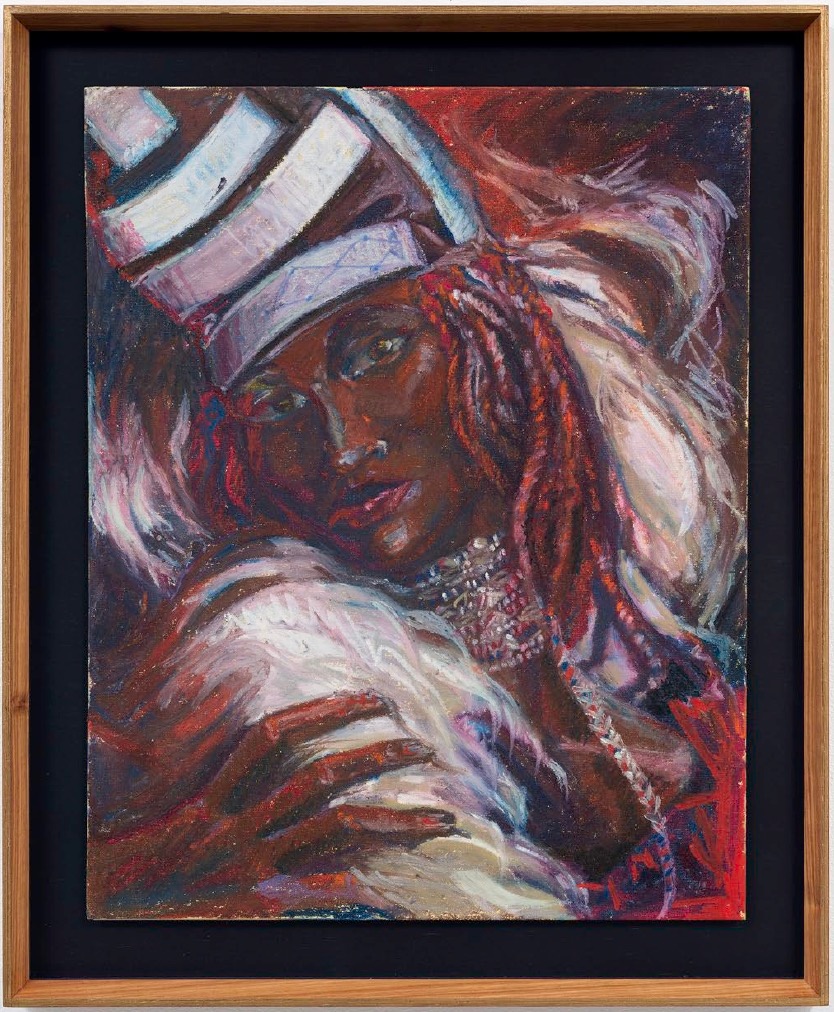
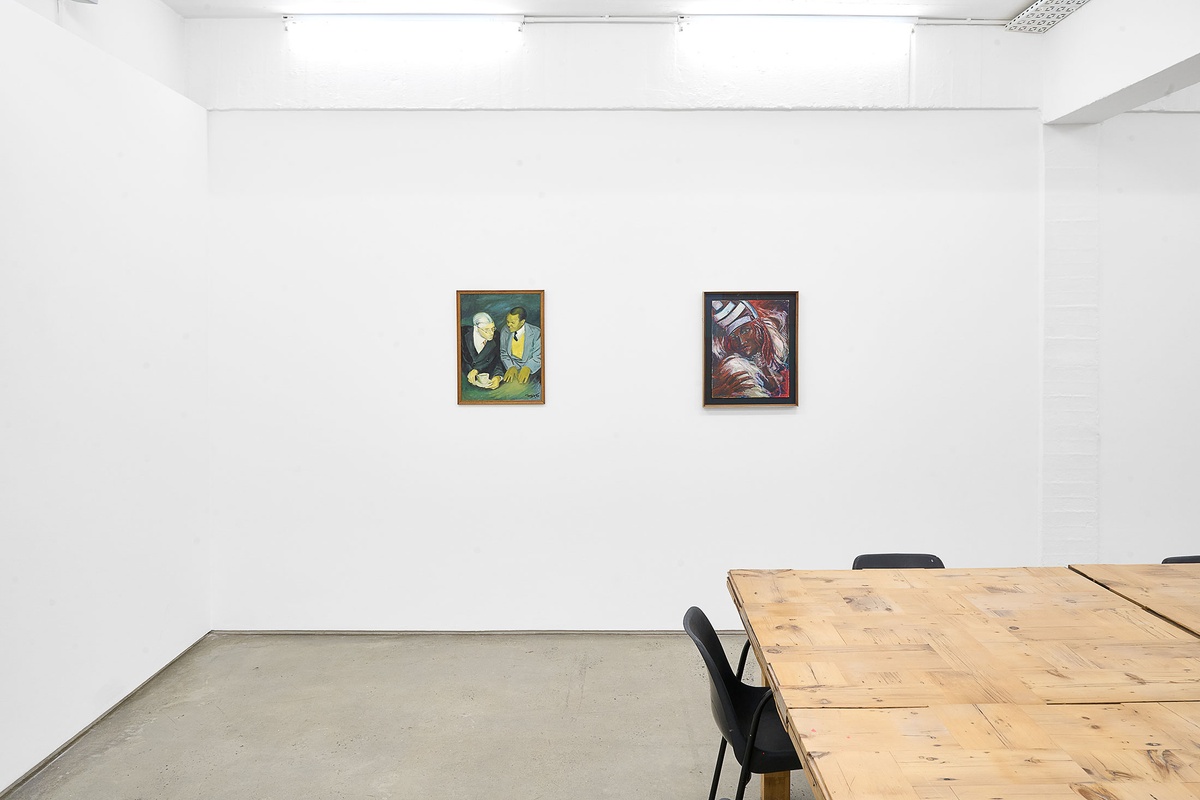
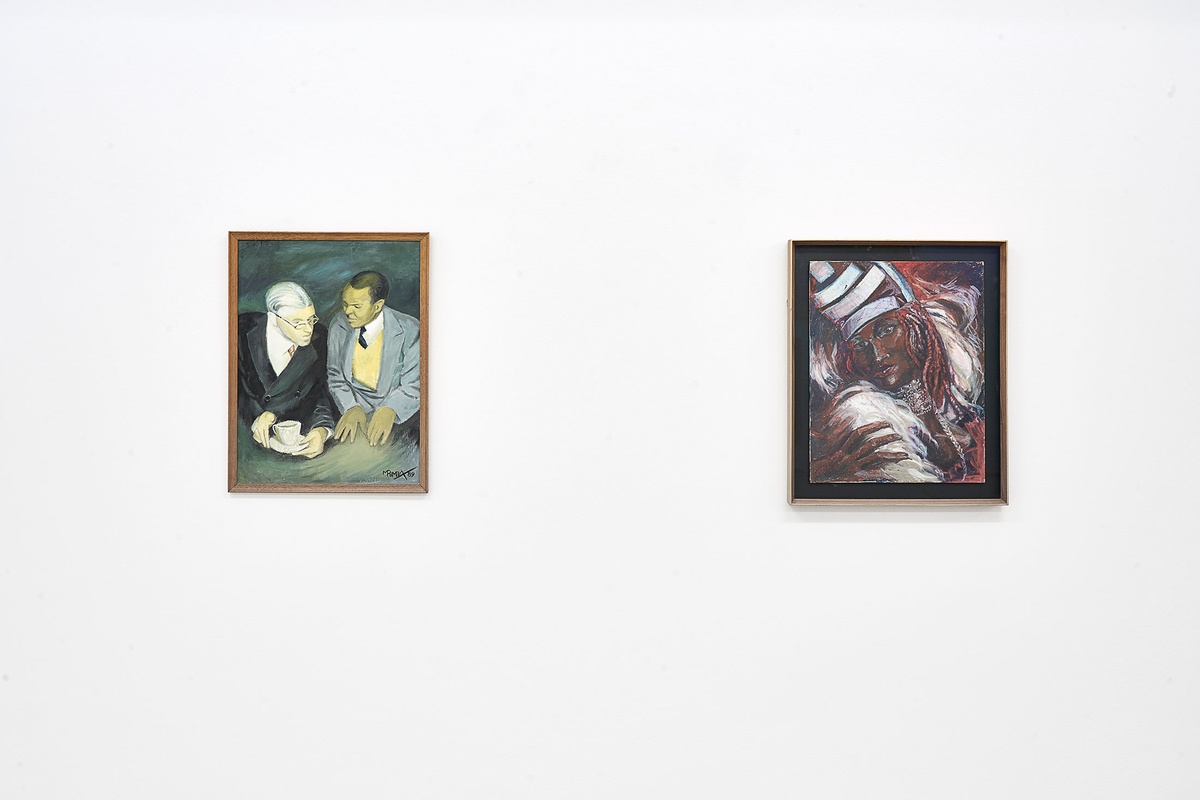
Featuring a character taken from Ruga’s expansive project, IiNyanga Zonyaka (The Lunar Songbook), this portrait appears among the dramatis personae of his cosmological fiction (or ‘saga’, in the artist’s words). Ask him to illuminate Nomalizo Khwezi’s narrative role, and he responds with an imagined resumé, which begins with a child prodigy and traverses a conscription campaign, a publishing company, a national textbook crisis, and ends on a dancefloor. She is to the artist an idiosyncratic expression of black, queer femininity, a coincidence of wide-ranging influences and aspirations. As curator Khanyisile Mbongwa writes, her character “embodies all these intersections of her duality as iqaba (‘the red people’, adherents of traditional Nguni cultures) and negqoboka (Christianised, modernised Africans).” Khwezi – described here in pastel and oil stick – exists between these two mythological understandings, much like the morning star for which she is named, which appears most bright between night and day.
b.1984, Mthatha
Athi-Patra Ruga is an artist of baroque excess. Embellishments and high-gloss finishes characterise much of his work across mediums, be it photographic, performative or sculptural. The petit point tapestries for which he is perhaps best known are rich in colour and detail, sensual in their tactile materiality and bold in their imagery. Such is the artist’s vision of Azania, an African utopia of imagined abundance and indulgence. Ruga’s opulent – even flamboyant – practice centres on the allure of this lost paradise. It proves a compelling counterpoint with which to critique South Africa’s broken ‘rainbow nation’ promise. Ruga, who studied fashion, is particularly attuned to the agendas of aesthetic expression. “With my work,” he says, “I want to create new mythologies and stories to disrupt the body national – I want to disrupt elements of taste, especially when taste is used nationalistically.” Hidden beneath the visual decadence of Ruga's practice is the more serious weight of social criticism.